
If you're planning to sell your home in Reno or Sparks, there's one statistic you need to know: in June 2025, 49.15% of listings in the Reno Metro area had price reductions. That's more than double the national average of 20.7%, and it reveals something critical about our current market—pricing strategy isn't just important, it's everything.
A price reduction isn't just a number change. It sends a message to buyers that something might be wrong with your property, creates doubt about your initial pricing judgment, and often results in selling for less than you would have received if you'd priced correctly from day one. Research consistently shows that homes requiring multiple price cuts sell for significantly less than properties priced accurately from the start.
So how do you position your Reno home to sell quickly and at full value without joining the nearly 50% of sellers who end up cutting their price? The answer lies in strategic pricing, expert market positioning, and understanding what's actually happening in Northern Nevada's shifting real estate landscape.
Understanding Reno's Current Market Reality
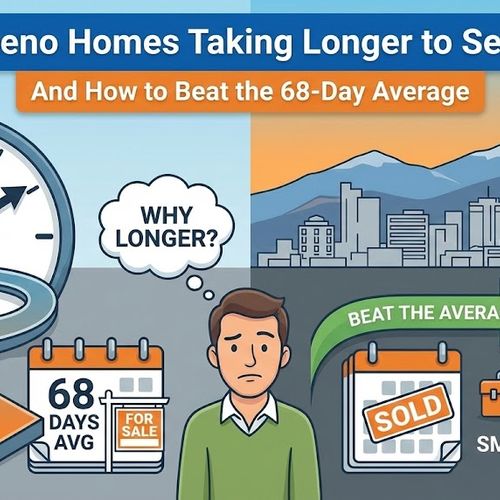
The Reno-Sparks market isn't crashing, but it's definitely changing. We're seeing a rebalancing after years of frenetic bidding wars and over-asking offers. Current market data shows homes taking an average of 62-89 days to sell—up from the 50-day average we saw last year. Sellers are receiving approximately 98.5% of their asking price, and in June 2025, nearly half of all homes sold below their original list price.
This isn't 2022 anymore. Buyers have choices now, with active inventory climbing to levels we haven't seen since before the pandemic. Neighborhoods like Southwest Reno, Somersett, and ArrowCreek have more options available, which means buyers can afford to be selective. They're comparing properties carefully, negotiating on repairs, and walking away from anything that feels overpriced.
The luxury market above $650,000 is experiencing particular pressure. While these higher-end homes in areas like Montreux, Caughlin Ranch, and Damonte Ranch still command strong interest when priced correctly, overpricing in this segment leads to extended days on market and inevitable price reductions that can stigmatize even exceptional properties.
The Hidden Cost of Overpricing
Here's what most sellers don't realize: a price reduction costs you more than just the difference in the listing price. Industry data indicates that homes with multiple price reductions sell for 6-7% less on average than properties priced correctly from the beginning. On a $600,000 Reno home, that's $36,000-$42,000 left on the table—not because your home wasn't worth it, but because the pricing strategy created doubt in buyers' minds.
When your home sits on the market for 60-90 days and then drops in price, buyers assume there's a problem. They wonder if there are hidden issues, if the neighborhood is less desirable than they thought, or if you're a desperate seller who'll accept lowball offers. Even when none of these things are true, perception becomes reality in real estate negotiations.
Beyond the psychological impact, overpricing creates tangible financial consequences. Every month your home sits unsold, you're paying mortgage payments, property taxes, insurance, utilities, and maintenance—costs that can easily run $4,000-$5,000 monthly on a $600,000 property. If overpricing extends your sale by just two months, you've absorbed $8,000-$10,000 in carrying costs while simultaneously reducing your final sale price.
Strategic Pricing: The Science and Psychology
Accurate pricing isn't guesswork—it's a strategic analysis of current market data, neighborhood comparisons, and buyer psychology. In Reno's current market, this means examining recent sales in your specific area (not citywide averages), understanding which improvements actually add value, and positioning your home competitively from day one.
The most successful pricing strategy in today's Reno market involves analyzing comparable sales from the past 30-60 days in your neighborhood—whether that's Somersett, ArrowCreek, Southwest Reno, Northwest Reno, Spanish Springs, Midtown, Damonte Ranch, Caughlin Ranch, or Montreux Renorealtyblog. Market conditions vary significantly between neighborhoods, and what works in one area may not apply to another.
Pricing precision also means understanding the buyer search patterns. Most buyers search in $25,000-$50,000 increments. A home priced at $625,000 will miss all the buyers searching up to $600,000, while a home strategically priced at $599,000 captures that entire buyer pool. This isn't about undervaluing your property—it's about maximizing exposure to qualified buyers who can actually afford your home.
Preparation That Prevents Price Reductions
Beyond pricing, home preparation plays a crucial role in avoiding price cuts. Buyers in Reno-Sparks are comparing your property against other well-presented options, and presentation drives perceived value.
Professional staging demonstrates measurable ROI. Industry research suggests that properly staged homes can sell 10-17% faster than comparable unstaged properties. On a home that would typically take 68 days to sell in the current Reno market, effective staging could reduce that timeline to 56-61 days. If staging costs $2,500-$3,500 for a $600,000 home and accelerates your sale by two weeks, you save approximately $2,000-$2,500 in carrying costs—creating a net neutral to positive return even before considering potential price improvement from multiple offers.
Strategic improvements also matter, but not all updates provide equal returns. In the Reno market, buyers consistently value:
High-ROI Updates:
- Fresh interior paint in neutral colors: typically costs $3,000-$5,000 and can return 100-150% through faster sales and better offers
- Professional landscaping and curb appeal: investment of $1,500-$3,000 often returns $5,000-$8,000 in perceived value
- Updated lighting fixtures and hardware: modest $800-$1,500 investment that modernizes the home's appearance significantly
- Deep cleaning, decluttering, and minor repairs: often the highest-return preparation, costing $500-$1,000 but eliminating buyer objections
Lower-ROI Updates to Avoid:
- Major kitchen remodels if the existing kitchen is functional (rarely recover full cost in Reno market)
- Extensive landscaping changes beyond basic maintenance and appeal
- Over-improving for the neighborhood (putting $80,000 into upgrades when comparable homes sell for only $20,000-$30,000 more)
The key principle: invest in preparation that removes obstacles to the sale, not upgrades that price you out of your neighborhood's competitive range.
Marketing Excellence: Your Competitive Advantage
In a market where nearly half of all listings are cutting prices, differentiation through marketing becomes essential. Reno attracts significant relocation interest from California, and many buyers make decisions based on digital presentations before ever scheduling showings.
Professional photography isn't optional—it's fundamental. Listings with high-quality photos receive 61% more views online than those with amateur photography. In a market with rising inventory, capturing attention in the first few seconds of a buyer's search scroll determines whether they request a showing or move on to the next property.
Drone footage showcasing Reno's mountain views, proximity to outdoor recreation, and neighborhood context provides perspective that ground-level photos cannot. For homes in Somersett, ArrowCreek, or properties with Sierra Nevada views, aerial photography communicates lifestyle value that justifies premium pricing.
Three-dimensional virtual tours allow serious out-of-state buyers to "walk through" your property remotely, filtering out casual lookers and attracting only motivated prospects. This efficiency means fewer showings with more qualified buyers—exactly what you want in today's market.
Timing and Flexibility: The Subtle Factors
Price reductions also correlate strongly with showing availability. Sellers who restrict showings to narrow windows or specific days reduce their buyer pool significantly. In the current Reno market, buyers expect to schedule showings within 24-48 hours. Properties with flexible showing policies receive more showings, generate more offers, and sell at higher percentages of asking price than those with restricted access.
Market timing matters too. While Reno's market remains active year-round, spring and early summer traditionally bring the highest buyer activity. Listing in late fall or winter isn't impossible, but it requires more aggressive pricing to compensate for reduced buyer traffic. If you're listing in November through January, factor in seasonal demand when setting your initial price—being slightly more conservative upfront prevents a mid-winter price cut that signals desperation.
The Agent Factor: Expertise Drives Results
The complexity of avoiding price reductions in today's Reno market underscores why agent selection matters enormously. An experienced agent brings neighborhood-specific market data, pricing expertise based on recent comparable sales, professional networks for staging and photography, and negotiation skills that protect your interests when offers arrive.
When selecting a real estate agent in Reno and Sparks, look for demonstrated expertise in your specific neighborhood, a track record of pricing accuracy, and strategic marketing capabilities. Agents who price properties correctly from the start—avoiding the 49% price reduction rate—provide substantially more value than those who take overpriced listings and gradually reduce them to market level.
Positioning Your Home for Success
Avoiding price reductions isn't about luck or market timing—it's about strategic positioning from day one. This means:
- Pricing based on current market data, not what you paid, what you need, or what your neighbor listed for six months ago
- Preparing your home to compete against the best-presented properties in your price range
- Marketing professionally with photography and digital presence that captures relocation buyers' attention
- Remaining flexible with showings and responsive to early buyer feedback
- Working with an agent who has proven pricing precision and neighborhood expertise
In a market where 49.15% of Reno Metro listings experienced price reductions in June 2025 Renorealtyblog, positioning yourself in the successful 51% requires strategic thinking, accurate data analysis, and expert guidance. The homes that sell quickly and at full value aren't necessarily the nicest properties—they're the ones positioned most strategically for current market conditions.
Your home represents significant financial value and likely years of memories. Protecting that value through strategic pricing and positioning ensures you capture maximum equity while avoiding the price reduction cycle that has affected nearly half of Reno sellers this year.
Ready to position your home strategically and avoid the price reduction trap? Contact Kevin Kinney at 775-391-8402 or Robin Renwick at 775-813-1255 to schedule a comprehensive listing consultation. We'll discuss your home's competitive position, develop strategic pricing based on current Reno market data, identify preparation priorities that deliver measurable ROI, and create a marketing approach tailored to your neighborhood and target buyers. Let's develop a data-driven strategy that positions your home to sell quickly and at full value—without joining the 49% of sellers who end up cutting their price.
The Kinney & Renwick Team
Kevin Kinney – 775-391-8402
Robin Renwick – 775-813-1255
[email protected]
kinneyandrenwickteam.com
FAQs (8 Questions)
Q1: What percentage of Reno homes are experiencing price reductions in 2025?
In June 2025, 49.15% of listings in the Reno Metro area had price reductions—more than double the national average of 20.7%. This elevated rate reflects a rebalancing market where pricing accuracy has become critical. Sellers who price strategically from day one avoid joining this statistic and typically sell for significantly more than those requiring multiple price cuts.
Q2: How much does a price reduction actually cost sellers in Reno?
Beyond the direct price cut, industry data shows homes with multiple price reductions sell for 6-7% less on average than properties priced correctly initially. On a $600,000 Reno home, that's $36,000-$42,000 in lost equity. Additionally, extended days on market from overpricing create carrying costs of $4,000-$5,000 monthly in mortgage, taxes, insurance, and utilities—costs that quickly compound.
Q3: What's the best pricing strategy for selling a home in Somersett or ArrowCreek right now?
Strategic pricing in Reno's higher-end neighborhoods requires analyzing comparable sales from the past 30-60 days specifically in your community—not citywide data. The luxury market above $650,000 is experiencing particular inventory pressure, making pricing precision essential. Work with an agent who has recent sales data in your specific neighborhood and understands which property features command premiums versus those that don't influence value.
Q4: Does professional staging really help avoid price reductions in the Reno market?
Industry research indicates properly staged homes sell 10-17% faster than comparable unstaged properties. In Reno's current market where homes average 62-89 days to sell, staging can reduce that timeline by 10-15 days. With typical staging costs of $2,500-$3,500 and carrying costs around $4,000-$5,000 monthly, accelerating your sale by even two weeks creates positive ROI while presenting your home competitively against other well-prepared listings.
Q5: How long should I wait before considering a price reduction if my Reno home isn't selling?
Before reducing your price, evaluate three factors: showing activity, buyer feedback, and time on market relative to your neighborhood average. If you're receiving minimal showings after 2-3 weeks, that typically signals a pricing issue. However, if showing activity is strong but offers aren't materializing, the issue may be home preparation, showing flexibility, or buyer feedback about specific features. A strategic agent review after 30 days helps determine whether price adjustment, marketing changes, or minor improvements will drive results.
Q6: What home improvements provide the best return when preparing to sell in Sparks or Reno?
High-return preparations include fresh neutral paint ($3,000-$5,000 investment with 100-150% return through faster sale), professional landscaping and curb appeal ($1,500-$3,000 investment returning $5,000-$8,000 in perceived value), updated lighting and hardware ($800-$1,500 for significant modernization impact), and deep cleaning with minor repairs ($500-$1,000 that eliminates buyer objections). Avoid major kitchen remodels or over-improving beyond your neighborhood's comparable sales—these rarely recover full cost in the Reno market.
Q7: How does pricing affect which buyers see my Reno listing online?
Most buyers search in $25,000-$50,000 increments online. A home priced at $625,000 misses all buyers searching up to $600,000, while strategic pricing at $599,000 captures that entire buyer pool. This isn't undervaluing—it's maximizing exposure to qualified buyers. In Reno's current market with rising inventory, appearing in more search results drives showing activity and competitive offers, while overpricing by even $25,000 can eliminate a significant portion of your potential buyer pool.
Q8: Why do so many Reno sellers end up reducing their price compared to the national average?
Reno's 49.15% price reduction rate (versus 20.7% nationally) reflects several factors: California relocators often have inflated expectations based on coastal prices; the market shifted more quickly here than in many regions; and some sellers still remember 2022's bidding war environment and price accordingly. Additionally, Reno's relatively small market means pricing errors get exposed quickly—there's less room for overpricing to "sit and wait" for the market to catch up compared to larger metropolitan areas.
Check out this article next