Key Takeaways:
- Most Reno-Sparks sellers we work with skip the full pre-listing home inspection, because the buyer orders their own and the seller pays for a report the buyer will not rely on.
- Four in five buyers still inspect: only 20 percent of buyers waived the inspection contingency in September 2026, according to the National Association of REALTORS.
- The one inspection we recommend to almost every seller is a pest inspection, because the inspector goes under the house, where small leaks sit unnoticed for years.
- A full pre-listing inspection makes sense inside the Chase Ready program, which fits newer homes in areas like Damonte Ranch, Spanish Springs and Somersett that are unlikely to need much.
- Anything an inspector finds becomes a known defect you must disclose on Nevada’s Seller’s Real Property Disclosure, so order inspections only when you intend to act on the results.
- If you do inspect, do it first, before staging, photos or pricing, so the findings shape the listing instead of surprising it.
Should you get a pre-listing inspection before selling your Reno-Sparks home? Usually, no. The buyer will order their own inspection, and most sellers do not want to pay for a report that buyer will not use. What we do recommend, for almost every listing, is a pest inspection. It is the one report that sends someone under the house, and that is where the surprises live. Kevin Kinney and Robin Renwick of the Kinney & Renwick Team (27 years combined, 315+ transactions, $100M+ closed, 92 five-star reviews) walk through the decision below.
This is a decision, not a rule. Here is how we think about it, option by option.
Why most Reno-Sparks sellers skip the full pre-listing inspection
- What you give up: an early look at what the buyer’s inspector will find, and the chance to fix it on your schedule.
- What you gain: you keep the inspection fee, and you avoid creating a report full of items you now have to disclose.
- When skipping fits: you have lived in the home, you know its condition, and you plan to let the buyer’s inspection set the repair conversation.
- When it does not: you have not been in the attic or under the house in years, or you are selling an older home with systems you have never had looked at.
Here is the practical problem with a seller-ordered inspection. The buyer’s lender, the buyer’s agent and the buyer themselves will want the buyer’s own inspector to walk the home. That is not a knock on your report. It is how the contract works. The Sierra Nevada REALTORS purchase agreement gives the buyer an inspection period, and the buyer uses it. Nationally, only 20 percent of buyers waived the inspection contingency in September 2026, according to the National Association of REALTORS Confidence Index published October 13, 2026. Four in five buyers are going to inspect no matter what you hand them.
So a full pre-listing inspection means paying for a report, then watching the buyer pay for a second one. Most of our sellers look at that and pass. Kevin leads our inspection and repair work, and his view is that the money is better spent fixing the handful of items you already know about than documenting the ones you do not.
There is a second reason, and it is the one sellers tend to miss. Nevada requires you to disclose defects you are aware of on the Seller’s Real Property Disclosure under NRS Chapter 113. Once an inspector hands you a 40-page report, you are aware of everything in it. That is not a reason to hide from problems. It is a reason to order an inspection only when you plan to act on what it finds. If you have questions about what you are required to disclose, talk to a licensed Nevada real estate attorney before you sign the form.
The pest inspection: the one report we recommend to almost everyone
- What you give up: a modest fee and an hour or two of access.
- What you gain: someone actually goes under the house and into the attic, looks for wood-destroying pests, and finds the moisture that invites them.
- When it fits: nearly every Reno-Sparks listing with a crawl space, and most with an attic.
- When it does not: a newer slab-on-grade home with no crawl space and no history of moisture, where the buyer’s general inspection will cover the same ground.
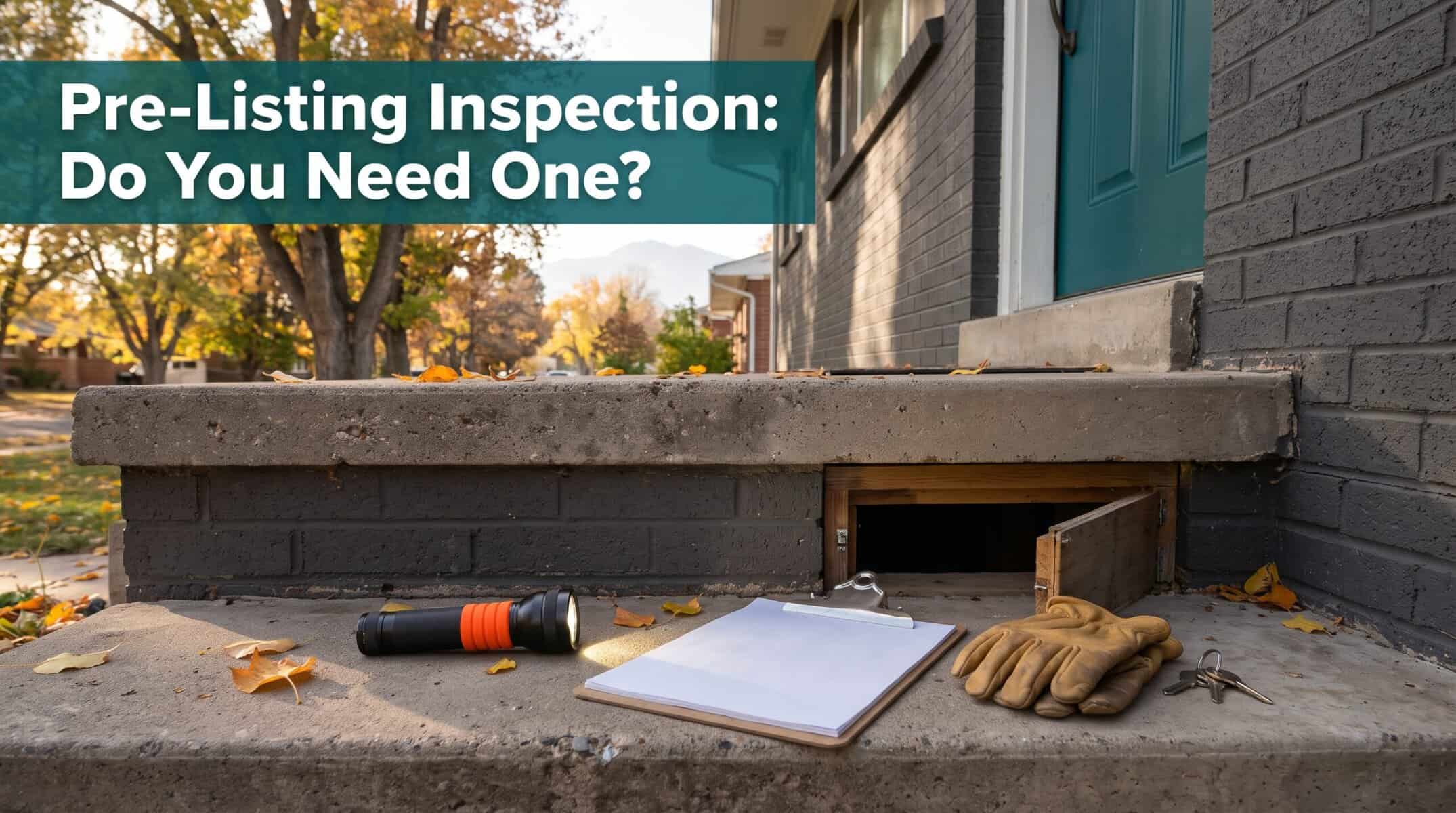
Here is why this one earns its place when the full inspection does not. Most people never go under their house. We see it on listing after listing in the older parts of town: Old Southwest Reno, Old Northwest Reno, the 1980s and 1990s homes in Caughlin Ranch. A supply line drips for three winters. A hose bib seeps into the crawl space. Nobody sees it, because nobody looks. Then the buyer’s inspector goes down with a flashlight and the repair request arrives with a moisture note on it.
A pest inspector goes down there first. The report is about wood-destroying organisms, but the inspector is looking for the conditions that bring them, and in our climate that usually means water. In practice, a pest inspection is the cheapest way to find the small leak before it becomes a negotiation point. Kevin coordinates the inspection and, if something turns up, walks the seller through the fix. That fix is usually a plumber visit, not a project.
Timing matters. When a listing is going to be inspected, it is one of the first things we do, before Robin brings in the stager and the photographer. A leak found in week one is a repair. The same leak found during the buyer’s inspection period is a repair request after inspection, with a five-business-day clock on your answer.
Chase Ready: when the full pre-listing inspection makes sense
- What you give up: the time to complete the inspection, disclosures and preliminary title work before the listing goes live.
- What you gain: a home that goes to market with its inspection, disclosures and title search done, and a home warranty covering the listing period.
- When it fits: newer homes that are unlikely to need much, where the inspection confirms condition rather than uncovering it.
- When it does not: an older home with known deferred maintenance, where the report would be long and every item on it becomes a disclosure.
There is one situation where we do recommend the full pre-listing inspection, and that is when a seller enrolls in Chase Ready, Chase International’s pre-listing program. The home gets a property inspection, fully completed disclosures and a preliminary title search before it hits the market, plus a home warranty for the seller during the listing period. We wrote about why buyers trust Chase Ready homes when the program launched.
Chase Ready works best on newer homes. A 2010s home in Somersett, a 2000s home in Damonte Ranch or Spanish Springs, or anything that would show up in a search of new construction homes in Reno-Sparks is unlikely to produce a long report. The inspection confirms what the buyer hoped, the disclosures are already complete, and the buyer’s own inspection tends to come back short. On a home like that, the program removes friction at the exact point in the deal where friction costs sellers money.
On an older home, the math flips. A 1950s Old Southwest Reno home or a 1970s South Reno ranch will produce a report with dozens of items, most of them minor, all of them now disclosed. Unless you intend to fix most of them before listing, a pest inspection plus honest disclosure usually serves you better than a full report you did not want.
The three options side by side
| Option | What gets looked at | Best fit | The catch |
|---|---|---|---|
| No pre-listing inspection | Nothing until the buyer’s inspector arrives | Sellers who know their home’s condition and will let the buyer’s inspection set the repair conversation | The first look under the house is the buyer’s, on the buyer’s clock |
| Pest inspection only | Crawl space, attic, wood-destroying pests, the moisture that attracts them | Nearly every Reno-Sparks home with a crawl space, especially older housing stock | It is not a full inspection; roof, electrical and mechanical systems are not covered |
| Chase Ready (full inspection plus disclosures, title and warranty) | The whole home, before listing | Newer homes in good condition that are unlikely to need much | Everything found is now a known defect to disclose; on an older home that list is long |
What about radon, infrared and the other specialty inspections?
Some sellers ask about radon tests, infrared moisture scans, sewer scopes and the rest. Each one is a different decision. A buyer who wants a radon test will order one, and we covered what that means in radon testing for Reno-Sparks homeowners, buyers and sellers. Infrared and sewer scopes come up on specific homes with specific histories. Homes on an acre or more in Washoe Valley or south of town often run on wells and septic systems, which bring their own inspections and their own disclosure points. We take those one listing at a time, and we do not quote a price for any of them here, because every inspector and every home is different. Get written quotes from more than one licensed inspector.
How we decide, listing by listing
When a seller sits down with us, the inspection question comes up early. Robin leads listing strategy and pricing, and she wants to know the home’s condition before she sets a number. Kevin leads inspections, repairs and the negotiation that follows, and he wants to know what the buyer’s inspector is going to find before the buyer does. Between the two of us, the conversation goes something like this.
How old is the home, and when did you last have anyone under it? A 2000s home in Wingfield Springs or South Meadows where the owner has kept up with maintenance is a different starting point than a 1960s home where nobody has opened the crawl space hatch since the last sale.
What do you already know about? If you know the water heater is near the end of its life and the deck needs paint, you are going to disclose that regardless. The question is whether you want to find out about the things you do not know.
Are you willing to fix what turns up? If the honest answer is no, a full inspection mostly creates disclosure obligations. A pest inspection still makes sense, because what it finds is usually small and worth fixing. If the answer is yes and the home is newer, Chase Ready is on the table. We walked through the broader prep decisions in what Reno-Sparks sellers should do before they list.
And if you do inspect, in any form, do it first. Before the stager. Before the photographer. Before the price is set. The findings should shape the listing, not interrupt it. That order is part of the full process of selling a home in Reno-Sparks we run on every listing.
If you know someone getting ready to sell an older Reno-Sparks home who hasn’t been under the house in years, that’s who we’re helping most right now. Connect us.
If you’re weighing a pre-listing inspection, or you want to know what your home would list for before that question comes up, Kevin and Robin build real comparative market analyses, not algorithm estimates, and they will tell you plainly which inspections your home needs and which it does not. Request yours at https://kinneyandrenwickteam.com/home-value-estimate/, or call Kevin at 775-391-8402 or Robin at 775-813-1255.
This article is for general informational purposes only and is not legal, tax or financial advice. Nevada disclosure obligations are governed by NRS Chapter 113; consult a licensed Nevada real estate attorney about what you are required to disclose. Inspection costs vary by inspector and home; obtain written estimates from more than one licensed inspector. Market conditions change, and the information here may not reflect the most current data by the time you read it. For guidance specific to your Reno-Sparks home and situation, contact Kevin Kinney or Robin Renwick directly.
Frequently asked questions
Should I get a pre-listing inspection before selling my Reno home?
Usually not. The buyer will order their own inspection, and most sellers do not want to pay for a report the buyer will not rely on. The exception is a newer home enrolled in the Chase Ready program, where the inspection confirms condition and the disclosures and title work are done before listing. For most other homes, we recommend a pest inspection instead.
Why do you recommend a pest inspection instead of a full inspection?
Because the pest inspector goes under the house and into the attic, and that is where unnoticed leaks live. Most owners never go into the crawl space. The report is about wood-destroying pests, but the inspector is looking for the moisture that attracts them, and finding a small leak before the buyer’s inspector does turns a negotiation point into a plumber visit.
Does a pre-listing inspection mean I have to disclose everything it finds?
In Nevada, you must disclose defects you are aware of on the Seller’s Real Property Disclosure under NRS Chapter 113. Once you have read an inspection report, you are aware of its contents. That is one reason we suggest ordering a full inspection only when you plan to act on the results. Consult a licensed Nevada real estate attorney about your specific disclosure obligations.
Will a buyer skip their own inspection if I provide one?
Almost never. Nationally, only 20 percent of buyers waived the inspection contingency in September 2026, according to the National Association of REALTORS. Buyers, their agents and their lenders want an inspector who works for the buyer. Your report can be useful context, but it does not replace theirs.
What is Chase Ready and when does it make sense?
Chase Ready is Chase International’s pre-listing program. The home gets a property inspection, fully completed disclosures and a preliminary title search before it goes on the market, plus a home warranty for the seller during the listing period. It fits newer homes that are unlikely to need much, where the inspection confirms condition rather than producing a long repair list.
When should a pre-listing inspection happen in the selling timeline?
First. If you are going to inspect in any form, do it before staging, photography and pricing. A leak found in week one is a repair you handle on your schedule. The same leak found during the buyer’s inspection period becomes a repair request with a five-business-day response window under the Sierra Nevada REALTORS purchase agreement.
How much does a pre-listing inspection cost in Reno?
We do not quote inspection prices, because every inspector, every home and every scope is different. Some sellers want infrared scans or radon tests added; others want a pest inspection only. Get written quotes from more than one licensed inspector for the scope you actually need, and ask us which scope that is for your home.
Do newer homes in Damonte Ranch or Spanish Springs need a pest inspection?
Sometimes. Many newer homes are built on slabs with no crawl space, and on those the buyer’s general inspection may cover the same ground. Homes with a crawl space or an attic still benefit from someone going in with a flashlight. We decide house by house, based on the foundation type, the home’s age and what the owner already knows.