Not legal advice. If you have received a repair request on your sale, talk with your agent now and, for legal questions about your contract, a licensed Nevada real estate attorney.
Key Takeaways:
- Under the standard Reno-area purchase agreement, a seller has five business days to respond in writing to a buyer’s repair request, and the buyer then has two business days to answer.
- The same form gives the seller the right to refuse requested repairs, and gives the buyer the right to cancel and recover the earnest money if the seller does.
- Items of general maintenance or cosmetic condition that the contract does not address are deemed accepted by the buyer, unless they involve safety, soundness or security.
- Most repair requests we see in Reno-Sparks are small: a dryer vent, a hose bib, a light that doesn’t work. A handyman handles them in an afternoon.
- The right answer is almost never automatic. It depends on what the item is, what it costs, how long it takes, and what the next buyer would ask for.
- A pre-listing pest inspection is often the lowest-cost way to find the problems under the house before a buyer’s inspector does.
A buyer sent a repair request after inspection on your Reno-Sparks sale. What now? You have three choices under the standard contract: agree, counter, or decline. Which one is right depends on the item, the cost, the time it takes, and how a second buyer would react to the same report. That analysis is the job, and it is what we do on nearly every sale.
We are Kevin Kinney and Robin Renwick. Almost every transaction has something to work through after the inspection. Below is what the Reno-area form actually says, how we think about each request, and how we get the work done without turning your sale into a construction project.
What the Reno-Area Contract Says About Repair Requests After Inspection
Most residential sales here use the Residential Offer and Acceptance Agreement published by Sierra Nevada REALTORS. The March 2026 version sets out the inspection contingency in one page, and the clock matters more than most sellers realize.
| Step | What the form says | Deadline |
|---|---|---|
| Inspection period | The buyer orders and completes all inspections and delivers copies to the seller | The number of days written into the contract, counted from acceptance |
| Buyer’s notice | Within that period the buyer delivers one of three things in writing: approval with no repairs, approval with a Notice of Required Repairs, or termination | Same period |
| Seller’s response | The seller answers the repair request in writing. If the seller does not, the buyer may cancel and the earnest money goes back to the buyer, less the buyer’s expenses | Five business days from delivery |
| Buyer’s answer | The buyer accepts or rejects the seller’s response. If the buyer goes silent, the seller may cancel and the deposit goes back to the buyer, less expenses | Two business days |
| Missed inspections | Any inspection not completed by the deadline is waived, and the seller is released from the cost of repairs that inspection would have found | End of the period |
Three other lines in the form shape every negotiation. First, the seller “reserves the right to refuse to complete requested repairs,” but the buyer may then terminate. Second, for any repair the seller does complete, invoices and receipts go to the buyer before closing. Third, items of general maintenance or cosmetic condition that the contract does not address are deemed accepted by the buyer, unless they involve safety, soundness or security. That last clause is the one we point to most.
The inspection period in this market is short. On recent Reno deals we have seen seven days written in. Business days exclude weekends and Nevada legal holidays, so a request delivered on a Friday afternoon gives you until the following Friday. Robin tracks every one of these dates from the day of acceptance. If you are earlier in the process, our walk-through of what happens after you accept an offer in Reno-Sparks puts the inspection window in context with the rest of escrow.
What a Typical Repair Request Looks Like in Reno-Sparks
Sellers often expect the worst when the inspection report arrives. The report itself is usually long. The request that follows is usually short.
Most of what we see is handyman work: a deck that needs paint, small drywall patches, a leaking outdoor hose bib, a dryer vent that needs cleaning and a working backdraft flap, a ceiling fan light that doesn’t turn on. One recent Reno request, on a home that inspected well, asked for exactly three items of that kind. The buyer approved everything else.
Buyers in this market have seen the same reports we have. They know a 20-year-old water heater is 20 years old. What they are asking for, most of the time, is a short list of things that should work and don’t. Answering that list quickly and cleanly keeps the deal moving and keeps the goodwill you will want at closing.
The bigger items, a roof, a furnace, a sewer line, a foundation question, are different, and they are rare on a home that was prepared properly before it listed. Our guide to what Reno-Sparks sellers should do before they list is where most of those surprises get caught.
Agree, Counter, or Decline: How We Analyze Every Request
There is no default answer. A leaky faucet is not a new roof. Robin and Kevin look at every request from all angles, and the questions are the same each time.
What is it? Safety, soundness and security items carry weight with any buyer, and with the next buyer if this one walks. A cracked window latch and a cracked heat exchanger are not the same conversation.
What does it cost? We get real numbers before you answer, not guesses. On small items the cost is usually less than the cost of a delayed closing.
How long does it take? A repair that needs a permit or a specialty trade may not fit inside the escrow. In that case a credit may be the only practical answer.
What would the next buyer ask for? If you decline and this buyer cancels, the same inspector’s findings follow the house. Nevada law requires sellers to disclose known defects, and a report that was in your hands is something you now know about. Ask a licensed Nevada attorney how that applies to your sale.
From those answers come three responses:
Agree. Right for short lists of small items. Fast, clean, and it closes the issue. The form requires receipts to the buyer before closing, so the work has to be real and documented.
Counter. The most common answer on a mixed list. Do the safety items, decline the cosmetic ones, or offer a credit in place of work the buyer can handle after closing. A credit lets the buyer pick their own contractor and keeps you out of the construction business. Lender rules limit how large a seller credit can be, so Robin checks that with the buyer’s lender before we offer one.
Decline. Right when the request reaches for items the contract already treats as accepted, or when the ask is out of proportion to the price. The form gives you that right. It also gives the buyer the right to walk, so declining is a judgment about this buyer and about the market behind them. Kevin handles that negotiation, and the answer always goes back in writing inside the five business days.
If the request arrives alongside an appraisal problem, our guide to what to do when the appraisal comes in low in Reno-Sparks covers how the two negotiations interact. And if you are worried the buyer is looking for a way out, what happens when buyer financing falls through explains the earnest money rules that apply.
Getting the Repairs Done Without Running a Construction Project
Once you have agreed to a list, the work has to happen before closing, and the Notice of Required Repairs usually sets a deadline a few days before close of escrow with a buyer’s right to re-inspect.
Here is how we handle it. We give you several names from our resource list of local tradespeople for each kind of work, you choose who to hire, and you contract with them directly. Kevin can oversee the work and follow up so nothing slips. For an out-of-town seller, or one who simply does not want to manage it, we get more involved in coordinating the trades, and we still use multiple people for multiple jobs rather than one person running everything. That keeps the pricing honest and the schedule realistic.
Keep every invoice. The contract requires them to go to the buyer before closing, and they are also your proof that the work was done by a qualified person. If the buyer re-inspects, that paperwork is what the re-inspection checks against.
This is also where the seller’s disclosure form comes in. Nevada’s Seller’s Real Property Disclosure Form covers what you know about the home’s condition. Repairs you complete during escrow can change what you know. Your agent and, for any legal question, a Nevada attorney should review whether an update is needed.
Should You Get a Pre-Listing Inspection in Reno-Sparks?
Sometimes. A full pre-listing inspection costs money and produces a report you then know about, which has disclosure consequences. For a well-maintained home in Damonte Ranch or Spanish Springs built in the last 20 years, it is often more than you need.
Two situations change that answer. If you list through the Chase Ready program, a pre-listing home inspection is part of the package, along with the disclosure documents and a home warranty through the listing period. Buyers see the condition before they offer, which tends to shorten the repair conversation later.
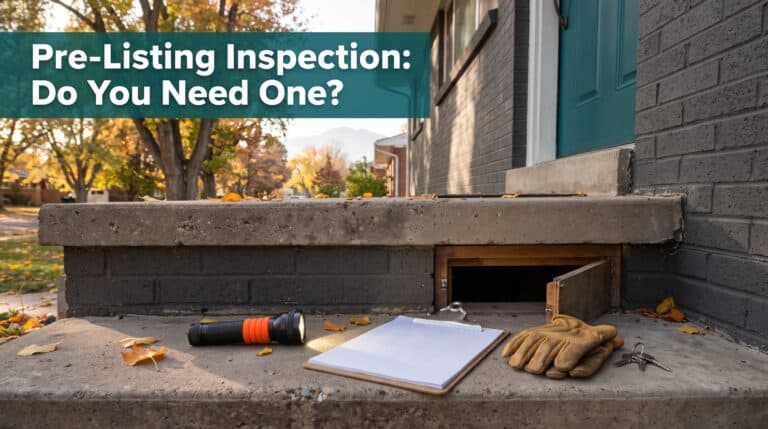
Short of that, we often recommend a pest inspection on its own. It is usually lower in cost than a full home inspection, and the inspector goes under the house, which is where leaks and pest problems hide. On older homes in Caughlin Ranch, Old Southwest Reno or Old Northwest Reno, that one report prevents more repair requests than any other single step. If the home has a crawl space and you have not been under it in years, this is where to start.
The buyer’s own inspection list on the Reno-area form includes pest, home, heating and cooling as standard, with sewer line, radon, fireplace and others added as the buyer chooses. Knowing what they will order tells you what to look at first. Our post on radon testing for Reno-Sparks homeowners covers one of the items buyers add most often.
When Declining Everything Makes Sense, and When It Doesn’t
Some sellers want to sell as-is and answer every request with a no. That is a legitimate strategy in the right situation, and our guide to selling a home as-is in Reno-Sparks explains when it makes sense. It works best when the price already reflects the condition and the buyer knew that going in.
It works poorly when the request is three small items on a home priced as move-in ready. Refusing to fix a hose bib to save a few hundred dollars, and losing a qualified buyer in a market where the next one may take weeks to find, is a bad trade. The market in each Reno-Sparks neighborhood moves on its own, and you can see what is listing and selling near you on our Browse Reno-Sparks Homes for Sale page. That picture is part of the decision too.
The Answer Is Analysis, Not a Rule
Repair requests are where many Reno-Sparks sales get tense, and where a good listing team earns its fee. Robin manages the deadlines and the contract; Kevin negotiates the response and keeps the repairs on track. Between us, we have 27 years in this market, 315+ transactions, more than $100 million in closed sales, and 92 five-star reviews. For the complete picture on pricing, preparation and timing, start with our guide to selling your home in Reno-Sparks.
If you know someone selling a home that needs some work before it goes on the market, that’s who we’re helping most right now. Connect us.
Ready to know what your home would sell for, and what to fix before you list? Robin and Kevin personally review the Reno-Sparks market for your home and build a real comparative market analysis, not an algorithm estimate. Request yours at https://kinneyandrenwickteam.com/home-value-estimate/, or call Kevin at 775-391-8402 or Robin at 775-813-1255.
This article is for general informational purposes only and is not legal, tax, or financial advice. Contract terms, contingency periods and market conditions vary, and the information here may not reflect the most current data by the time you read it. For legal questions about a specific contract, repair request or disclosure obligation, consult a licensed Nevada real estate attorney. For guidance specific to your Reno-Sparks home, contact Kevin Kinney or Robin Renwick directly.
Frequently Asked Questions
How long does a seller have to respond to a repair request in Nevada?
Under the March 2026 Sierra Nevada REALTORS purchase agreement used in most Reno-area sales, the seller must respond in writing within five business days of delivery. If the seller does not respond, the buyer may cancel and recover the earnest money, less the buyer’s expenses. Business days exclude weekends and Nevada legal holidays.
Can a seller refuse to make repairs after inspection in Reno?
Yes. The standard Reno-area form says the seller reserves the right to refuse requested repairs. The buyer may then terminate the contract and recover the earnest money, less expenses. Whether to refuse is a judgment about the item, the cost, this buyer and the market behind them, not a right to exercise automatically.
Should I offer a credit instead of making repairs?
Often, on items the buyer can handle after closing or that will not fit inside escrow. A credit lets the buyer choose their own contractor and keeps you out of managing the work. Lenders limit the size of seller credits on financed deals, so confirm the cap with the buyer’s lender before offering one.
What repairs are sellers required to make in Nevada?
None by contract default. The Reno-area form lets the buyer request repairs and lets the seller refuse them, with cancellation as the buyer’s remedy. Items of general maintenance or cosmetic condition not addressed in the contract are deemed accepted by the buyer, except for safety, soundness or security conditions. Separate disclosure duties under Nevada law still apply; ask an attorney.
What happens if I don’t respond to a repair request in time?
Under the standard Reno-area form, the buyer may terminate and the earnest money goes back to the buyer, less the buyer’s expenses. The same rule runs the other way: once you respond, the buyer has two business days to answer, or you may cancel. Your agent should calendar both deadlines on the day the request arrives.
Do I have to use the buyer’s contractor for repairs?
No. The seller chooses who does the work unless the contract says otherwise. We provide several names from our resource list for each trade, the seller hires and pays them directly, and receipts go to the buyer before closing. The buyer may re-inspect before closing if the Notice of Required Repairs provides for it.
Is a pre-listing inspection worth it in Reno-Sparks?
Sometimes. It is included if you list through the Chase Ready program. Otherwise we often recommend a pest inspection alone, since it is usually lower in cost and the inspector goes under the house, where leaks and pest issues hide. Any report you obtain becomes something you know about for disclosure purposes.
Can a buyer back out after inspection in Nevada?
Yes, inside the inspection period. The Reno-area form lets the buyer terminate within that window and recover the earnest money, less expenses, for any reason the inspections reveal. After the period ends, inspections not completed are waived, and the buyer’s exit under this contingency closes. Other contingencies, such as loan and appraisal, run on their own clocks.